What is a Clear Span Building
All of our Hoop Barns Are Clear Span Buildings We talk a lot about clear span buildings here but maybe
We are often asked why a hoop building needs a pony wall when someone doesn’t have any horses? Okay, that’s a joke but you do need a pony wall with many hoop buildings.
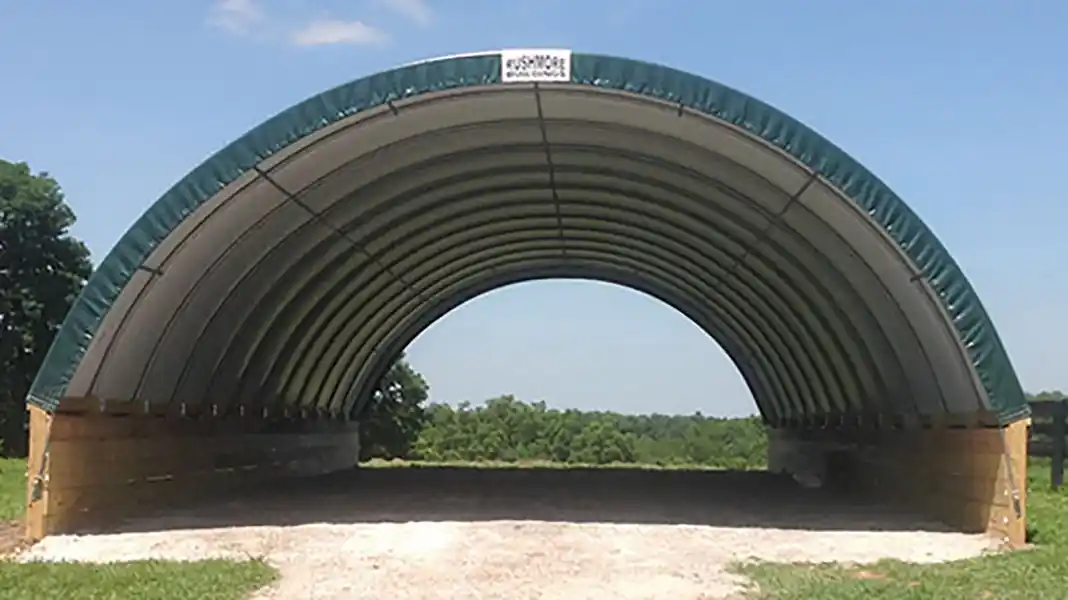
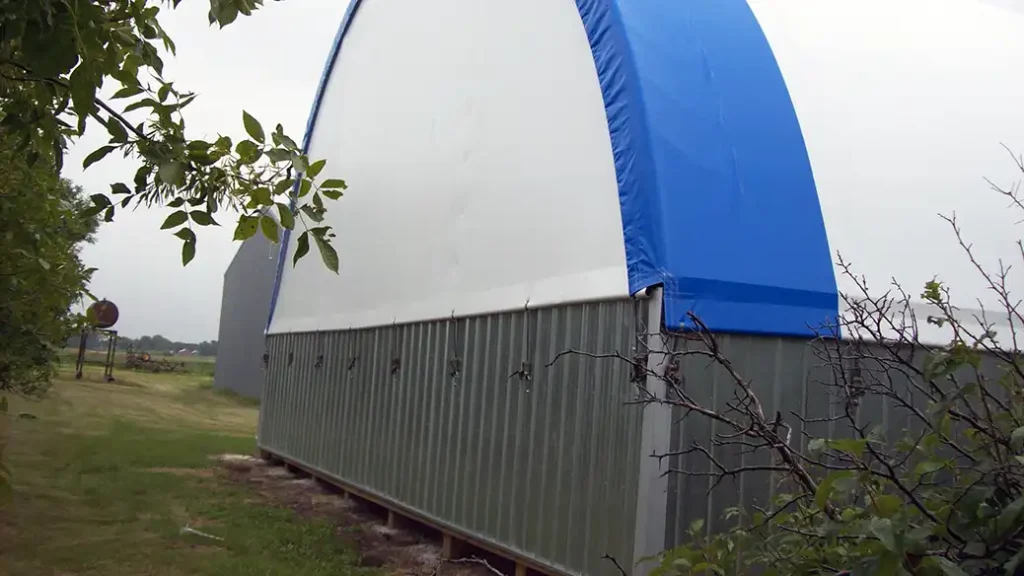
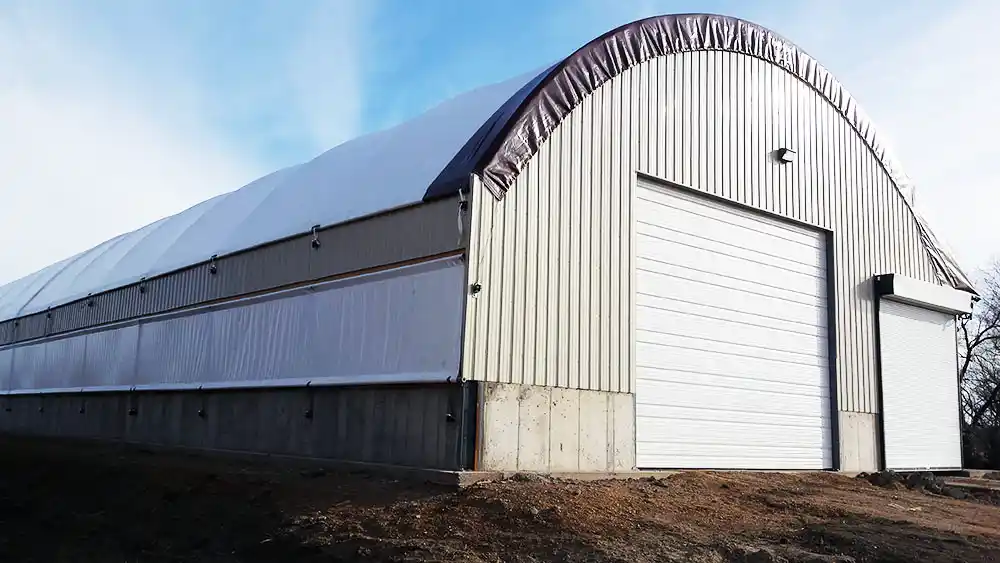
First, to explain what a pony wall is as far as our hoop barns, the pony wall is what makes up the lower sides of your building. It serves as the foundation of your hoop structure and anchors it to the ground as well as serving as the place to attach your cover and properly tension it.
We consider many foundation options to be “pony walls” for our purposes. You can put these buildings on posts, concrete blocks or pillars, steel posts, etc. The options are almost as endless as our other building options.
 The “standard” height of this support wall is four feet but can be easily adapted to suit your needs. You can find the actual profile dimensions for each building on its page in the Specifications section. This can help you decide which building and pony wall height will meet your needs. We have buildings up to 40 foot tall so I think we can find you something if you need high clearance.
Most of our hoop barns require a foundation wall at least two feet high so your cover has room to cover your wall to seal up your building and be properly tensioned.
The actual pony wall may be built many different ways.
Probably the most common construction of a hoop building pony wall is with posts anchored in concrete. Depending upon the overall size of the building and the height of the wall desired, these posts can range from 6x6s all the way up to 8x8s and larger laminated posts. The larger the building the more concrete it is desirable to set the posts into.
Let’s say you already figured out where to put your hoop barn and have it all laid out. Where we live, it’s time to dial 811. You too? You’re ready to drill some holes and get started.
At this point, how many posts and how big comes into it, and, yep you need an auger. If your building is anything beyond the smallest, there should be a machine behind the auger. As to how long the posts should be, these posts are the foundation of your fabric building. They need to be at tall as they need to be to be below frost level in your area plus the height of your wall.
Mark your spacing how far apart your hoop rafters are on your layout line. Keep in mind many buildings have an offset for their outside posts. Your exact amount is in the manual.
We like to drill oversize holes to fill with concrete to anchor these buildings down. Rent a bigger bit if you can.
One trick we use when setting posts for pony walls is to drill through the bottom of the post at the level where the concrete will be and insert rebar “fingers” to extend into the concrete. This will keep your post anchored in the concrete even if the post shrinks away from the concrete.
For most buildings, you do want to close up the sides. Otherwise, you have a giant wing shaped thing sitting there if the breeze gets too stiff. We do have buildings designed to be open sided and others that are easily adapted.
Open sided generally requires some steel and more concrete but you can sure do it if that’s in your budget.
If you use posts for your pony wall, you will most likely want to cover them with something to close up the wall. This is most commonly done on the outside of the building to protect them but can be accomplished from the inside also.
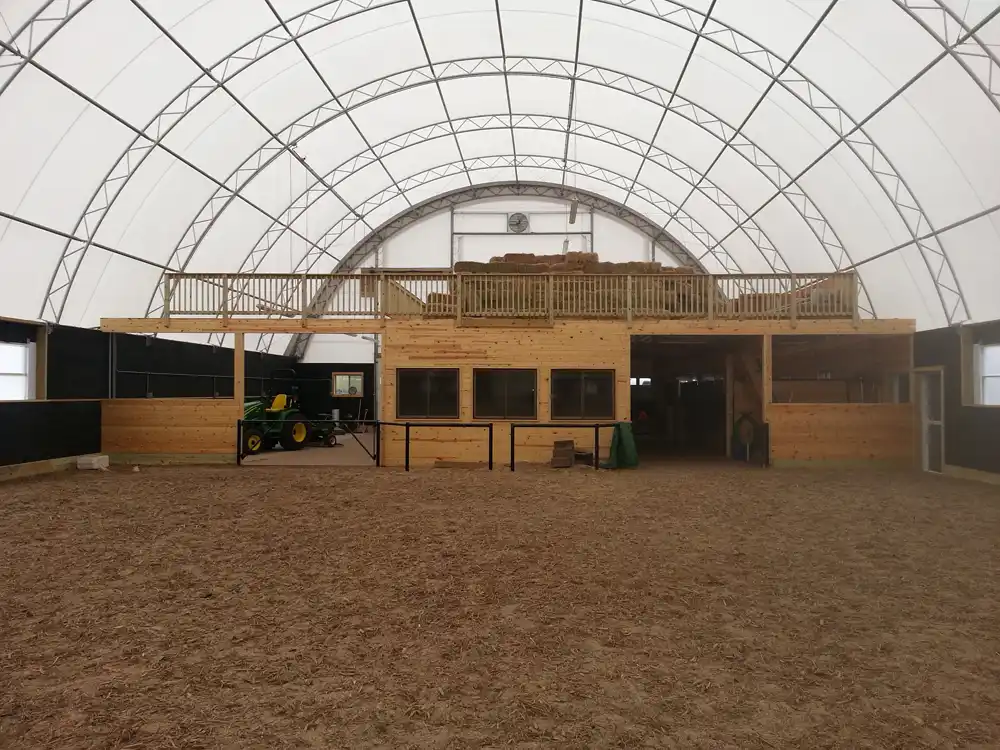
One of our favorite materials for closing in the wall is tongue and groove 2×6’s. These provide a pretty sturdy, draft proof wall that’s great for livestock. Many times, with livestock, we construct the wall on the inside of the building to prevent post rubbing. Sometimes we’ve even added cattle or hog panels to the top of the wall to keep the livestock well away from the tarp, particularly with sheep and goats.
Many other materials can also be used to close in your wall. We’ve used everything from sheet metal and plywood to hog panels for hay barns where more air circulation is desirable. Some people recycle materials they already have on hand.
Our favorite wall construction for larger hoop buildings or taller walls is a poured concrete wall. This wall must extend into the ground below the frost level or, even in warmer areas, to a depth that will support the weight of the rafters and resist uplift.
Another option for a pony wall that has become increasingly popular these past few years are large concrete blocks, sometimes called “eco blocks” or “monster block”. These blocks are generally a by-product of concrete batching plants and can be purchased very reasonably. The blocks can be stacked to reach your desired height but they require the use of concrete anchors for fastening both the rafters and your ratchet tensioning.
Pony walls can and have been built many other ways from regular concrete blocks to steel beams and possibly others we’re not even aware of. Your choice is largely dictated by your use of the hoop structure and the materials readily available.
With our very wide, large, buildings we do recommend that you consult an engineer to make sure that your pony wall will provide an adequate foundation for your building in your particular soil and use.
Pony walls can and have been built many other ways from regular concrete blocks to steel beams and possibly others we’re not even aware of. Your choice is largely dictated by your use of the hoop structure and the materials readily available.
Give us a jingle if you have questions we can help you with or maybe you’d like to hook up with a contractor we know after reading all that?
All of our Hoop Barns Are Clear Span Buildings We talk a lot about clear span buildings here but maybe
At the Hoop Barn, we believe that bigger truly is better! Our Rushmore double truss barns over 85 feet not only offer more space but also come at a lower cost per square foot compared to shorter buildings. Why? Because setting up for a larger structure takes the same time and labor as a smaller one, allowing us to pass those savings directly to you. Plus, with our commitment to fair pricing, we ensure that you get the best value without compromising quality. Discover why investing in a larger fabric building is a smart choice that benefits everyone involved!
All Kinds of Livestock are Happy in a Hoop Barn One of the most common uses of hoop buildings is